
What Elite Surgical Teams Know About Psychological Safety That Your Leadership Team Probably Doesn’t
Your team looks high-performing on paper. Deadlines met, numbers delivered, no visible conflict. But when did someone last tell you something you didn’t want to hear? Psychological safety in teams isn’t about comfort, it’s about whether people speak when it costs them something to do so.
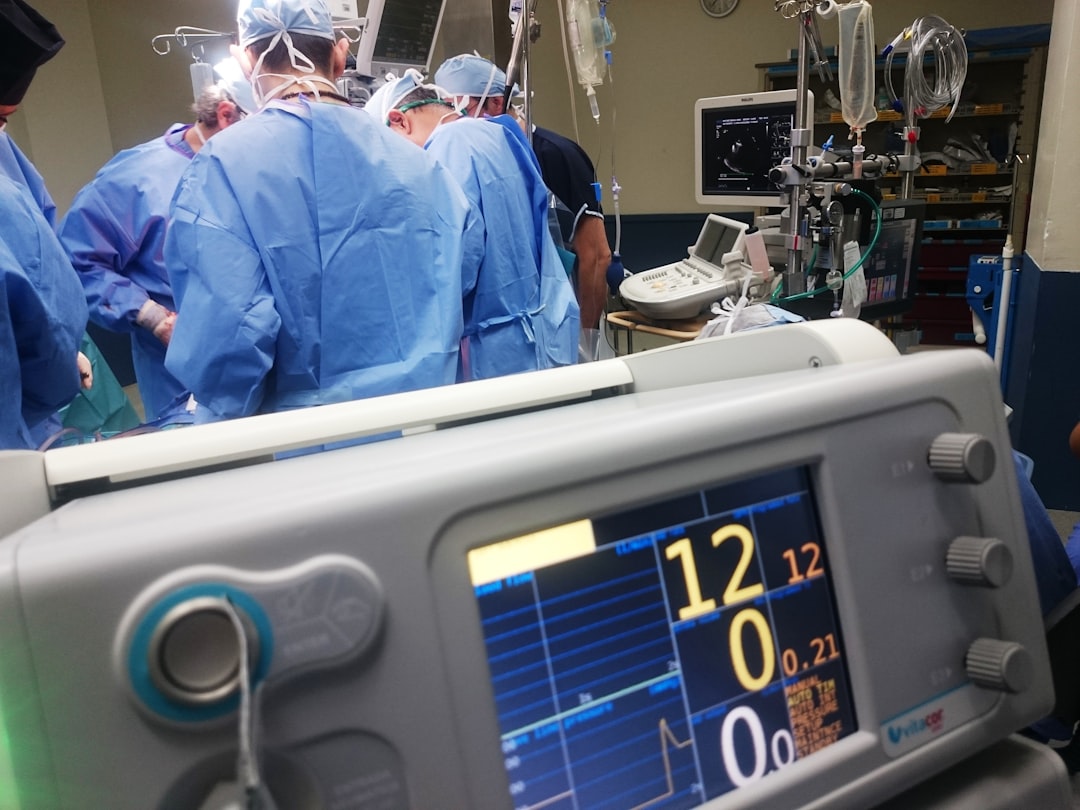
Visavadia & Murden, writing in ‘The ‘A-Team’ in surgery: high performance with heart’ in The Bulletin of the Royal College of Surgeons of England in 2026, draw a direct comparison between elite surgical units and special forces to explain what actually separates high-performing teams from merely competent ones.
Psychological Safety in Teams Under Pressure
The authors examine what allows surgical teams to sustain precision and trust across high-stakes, high-fatigue conditions without burning out their members. Their analysis draws on observed team behaviour in operating theatre environments, where hierarchy is steep and the cost of silence can be fatal. The core question they pursue is why some teams maintain both performance and psychological sustainability while others degrade under identical pressures.
Their findings are specific and worth sitting with. Teams that performed consistently well shared three features: members could raise concerns without fear of humiliation, leaders actively modelled fallibility, and the team had agreed norms for disagreement before crises arrived, not during them. The authors note that in lower-performing units, junior members withheld safety-relevant information in roughly 60% of observed high-pressure moments, not because they lacked the knowledge but because the social cost felt too high. Pre-agreed escalation protocols cut that suppression sharply. The comparison to special forces is apt: both environments demand that the person with the most relevant information speaks, regardless of rank.
Applying This to the Boardroom and Beyond
The lesson from surgical teams is that psychological safety doesn’t emerge from a workshop or a values poster. It gets built through repeated small moments where the leader visibly rewards the uncomfortable truth. Satya Nadella’s early years at Microsoft offer a well-documented example: he publicly credited engineers who flagged product failures, and over time that behaviour shifted what people were willing to say in meetings. The surgical research suggests the same mechanism, when the leader models vulnerability first, the team recalibrates what’s safe to say.
The pre-crisis norm-setting finding is the one most executives miss. At Pixar, Ed Catmull instituted ‘Braintrust’ sessions specifically to create a structured, pre-agreed space for candid critique before films reached production. The point wasn’t to make people feel good. It was to separate the social risk of criticism from the act of criticism itself. Your team needs the equivalent: a standing agreement, made before the next difficult quarter, about how disagreement gets raised and heard. Without that agreement in place, silence in the room is rational, not cowardly.
Psychological safety in teams also requires leaders to distinguish between comfort and candour. A team that never disagrees with you isn’t safe, it’s suppressed. The two can look identical from the outside.
What This Research Can’t Tell You
The surgical context is unusually high-stakes, which may mean the findings overstate how much safety-related suppression occurs in lower-pressure commercial settings. The study also draws on observed behaviour in a specific professional culture where hierarchy is particularly rigid, so direct extrapolation to flatter organisational structures warrants care.
I keep returning to the 60% figure, more than half of safety-relevant information withheld, not from ignorance but from social calculation. That’s not a communication problem. It’s a design problem. The teams that solved it didn’t do so through culture change programmes; they built specific, structural moments where candour was expected and protected. The question I’d put to any senior leader reading this is simple: in your last ten important meetings, how many people in the room knew something that would have changed the outcome, and said nothing?
Image: Photo by Natanael Melchor on Unsplash
Explore more insights at Ariston Institute.