
When Psychological Safety Meets Motivation, Team Performance Follows
You have two designers who never speak up in critique sessions, a product lead who fills every silence, and a team that ships mediocre work despite obvious talent. Psychological safety in teams is often treated as a soft nicety, but a growing body of research suggests it is the load-bearing wall of team performance. Strip it out and the whole structure weakens.
Shibbir et al., in ‘Motivation and Team Performance: Applying Management Theories in Creative Design Studios’, published in Perception Motivation and Attitude Studies in 2026, set out to understand precisely how these forces interact inside high-pressure creative environments.
Psychological Safety in Teams and the Motivation Gap
The researchers examined creative design studios, environments where candid peer feedback and iterative risk-taking are not optional extras but core to the work. Drawing on Self-Determination Theory, Herzberg’s two-factor model, and the Job Characteristics Model, they studied how team climate, job design, and leadership behaviours combine to shape performance outcomes. Their sample comprised multiple studio teams across varied organisational contexts, analysed through an integrated theoretical framework rather than a single-variable lens.
The findings are worth sitting with. Teams that reported high psychological safety showed measurably stronger intrinsic motivation, and that intrinsic motivation in turn predicted task quality more reliably than extrinsic incentives alone. Autonomy and competence, two of Self-Determination Theory’s core psychological needs, were significantly more likely to be satisfied in teams where leaders modelled vulnerability and tolerated early-stage failure. Herzberg’s hygiene factors, things like fair pay and decent working conditions, reduced dissatisfaction but did not generate the discretionary effort that safety-rich environments produced. The practical implication is sharp: if you are relying on compensation alone to lift performance, you are solving the wrong problem.
Applying the Research at Senior Level
The most useful shift a senior leader can make is to stop treating psychological safety as an attitude and start treating it as a structural design choice. At Pixar, Ed Catmull famously institutionalised the Braintrust, a regular peer critique forum where no one had authority over anyone else’s project. The safety was baked into the process, not left to individual goodwill. Microsoft’s Satya Nadella made a comparable move in 2014 when he reframed the company’s internal culture around growth mindset, explicitly rewarding managers who admitted mistakes in team reviews. Both cases show that safety scales when it is embedded in recurring rituals, not just stated in values documents. If you lead a senior team, audit your last five meetings: who spoke, who didn’t, and what happened to the person who last raised a concern that proved inconvenient. That audit will tell you more about your team’s actual safety level than any engagement survey.
A Note on Scope and Limitations
The study focuses on creative design studios, which are self-selecting environments where people already expect iterative feedback and accept ambiguity as part of the job. Leaders in more compliance-driven or hierarchical sectors, financial services, say, or regulated healthcare, should treat the findings as directionally useful rather than directly transferable without adaptation.
Closing Reflection
I keep returning to the Herzberg finding here, because it punctures a persistent illusion. Many boards still believe that a well-structured bonus scheme is their primary performance lever. The research says it removes friction; it does not generate energy. The energy comes from people feeling safe enough to bring their actual thinking into the room. I’ve watched talented leadership teams spend months redesigning incentive structures while leaving their meeting culture completely untouched, and wondering why nothing changed. The question I’d put to any senior leader reading this: when did someone on your team last tell you something you didn’t want to hear, and what did you do next?
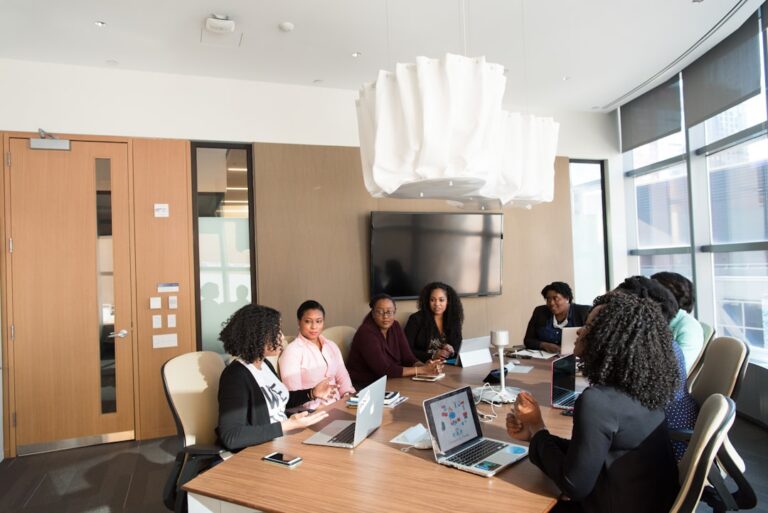
Image: Photo by Nasik Lababan on Unsplash
Explore more insights at Ariston Institute.